
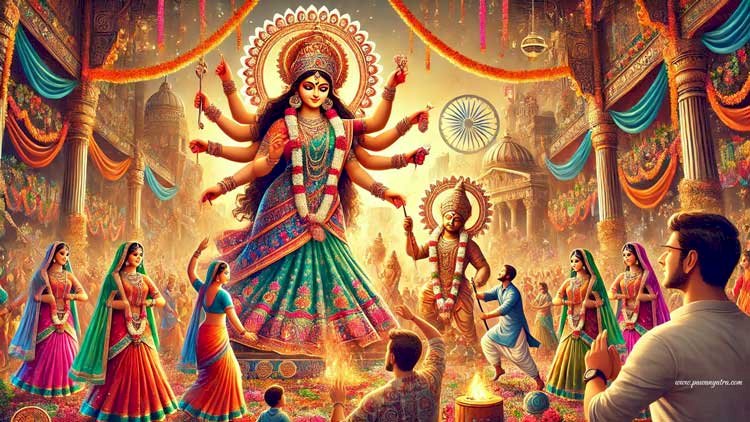
Navaratri is a nine-night festival dedicated to the worship of the Divine Feminine, Goddess Durga, in her nine different forms (Navadurga), celebrating her victory over the buffalo demon Mahishasura. This festival involves fasting, daily rituals, and regional cultural celebrations like the vibrant Garba and Dandiya dances of Gujarat, or the grand Durga Puja in Eastern India.
The 10th day, known as Dussehra or Vijayadashami (Victory on the Tenth Day), marks the culmination of the celebrations, symbolizing the ultimate triumph of good over evil. This single day commemorates two major victories: Goddess Durga slaying Mahishasura, and Lord Rama’s defeat of the demon king Ravana in the epic Ramayana. The day is celebrated across India with the immersion of Durga idols (Visarjan) and the burning of towering effigies of Ravana, his brother, and son, accompanied by fireworks.
🗺️ Regional Celebrations
The focus and name of the festival vary significantly across India:
- North India: The nine nights feature the Ramlila, a dramatic enactment of the Ramayana, culminating on Dussehra with the burning of Ravana’s effigy (Ravan Dahan).
- East India (West Bengal, Assam): The last five days are celebrated as Durga Puja, featuring elaborate pandals and grand worship of Goddess Durga, ending with the immersion of the idols on Vijayadashami.
- West India (Gujarat): Navaratri is dominated by the nightly, energetic folk dances of Garba and Dandiya-Raas around a clay pot (Garbo) symbolizing the universe.
- South India (Karnataka, Tamil Nadu): Known as Dasara, it includes the exhibition of decorated dolls (Golu/Kolu) and Ayudha Puja (worship of tools, books, and weapons), with the Mysore Dasara being particularly famous for its royal procession.